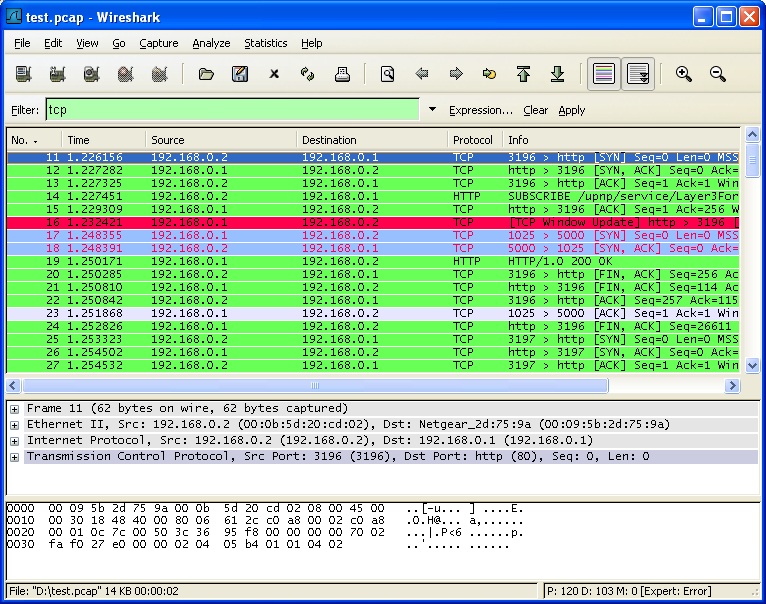
In complex automation systems, problems rarely announce themselves clearly. A value arrives too late. A subscription behaves differently than expected. A client reconnects more often than it should. At that point logs are often not enough. This is where Wireshark becomes indispensable.
I use Wireshark as a microscope. Not to guess what the system is doing, but to see what is actually happening on the wire.
Why Wireshark matters in OPC UA environments
OPC UA is a rich and layered protocol. Sessions, secure channels, endpoints, subscriptions, monitored items. When something goes wrong, the issue can sit at many levels.
With Wireshark you can observe OPC UA communication exactly as it happens between client and server. No abstractions. No assumptions.
Typical questions I answer with Wireshark:
Is the client really creating the subscription it claims to create
Are monitored items acknowledged by the server
Is the sampling interval negotiated or overridden
Are secure channel renewals happening too often
Does the server close the session or does the client disappear
These are not academic questions. In large scale infrastructure systems they directly impact reliability and safety.
Dissecting OPC UA step by step
Wireshark understands OPC UA at protocol level. Once the right dissectors are enabled, you can follow the entire lifecycle:
Hello and Acknowledge during transport setup
OpenSecureChannel requests and responses
CreateSession and ActivateSession
CreateSubscription and MonitoredItem creation
Publish cycles and keep alive messages
Seeing these messages in sequence often explains issues that remain invisible at application level.
A common example is a system that appears stable but shows sporadic data gaps. In Wireshark you may notice delayed Publish responses or repeated sequence numbers. That immediately shifts the investigation from application logic to timing or network behavior.
Engineering use cases from the field
In verification and validation work, Wireshark is not a hacking tool. It is an evidence tool.
I use it to:
Verify that an implementation follows the expected OPC UA communication pattern
Confirm that timeouts and retries behave as specified
Validate that security modes and policies are actually in use
Correlate system events with real network traffic
Support discussions with suppliers using objective data
Instead of opinions, you bring packet captures. That changes conversations.
Wireshark complements structured testing
Wireshark does not replace test plans or automated tests. It complements them.
Automated tests tell you that something failed
Wireshark tells you why it failed
Especially in distributed systems, this difference matters. Many issues are emergent behavior between components that individually behave correctly.
Final thought
In industrial software, trust comes from understanding. Wireshark provides that understanding at the lowest meaningful level.
If you work with OPC UA and have never dissected your own traffic, you are missing a powerful diagnostic and verification tool. Once you start using it, you will never fully trust a system again without looking at the packets.