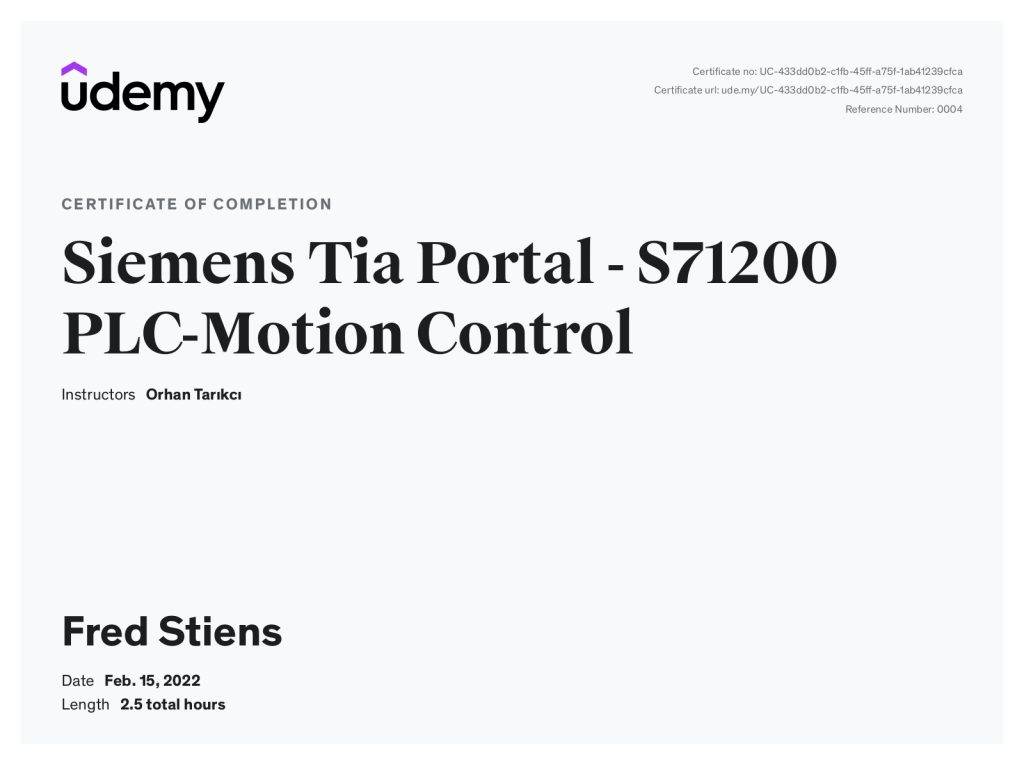
What I Learned: TIA Portal Feels Familiar When You Know Other PLC Systems
One of the most important realizations while reviewing the Siemens TIA Portal S7 1200 course was how familiar the environment felt in comparison with the IDE of XAMControl.
Shared Engineering Concepts
The similarities sit at the core of how automation logic is designed and executed. Both environments rely on:
- A PLC execution model where logic is processed cyclically
- Function blocks as reusable, encapsulated units of behavior
- Clear separation between configuration, logic, and runtime execution
Once you recognize these patterns, the learning curve goes fast. You are no longer learning automation from scratch. You are translating an existing model into a new tool.
Function Blocks and Reuse
Function blocks in TIA Portal align closely with how modular logic is structured in XAMControl. Encapsulation, parameterization, and reuse are treated as first class concepts. Engineers who understand modular design, state handling, and clear interfaces can move between platforms far more easily than job titles or product names might suggest.
Ladder Logic as a Common Language
Ladder diagrams in TIA Portal follow the same fundamental principles used in many industrial platforms. Contacts, coils, interlocks, and conditions behave in a deterministic and predictable way.
Why This Matters
This insight is important because it shifts the conversation away from tool specific experience and toward PLC and SCADA engineering fundamentals. TIA Portal is another implementation of well established automation concepts. If you understand virtual PLC execution, ladder logic, and functional decomposition, you already possess most of the intellectual tools needed to work with it. The rest is tooling, conventions, and practice.