From September 1999 to May 2002, I worked at Alcatel, a world leader in ADSL technology, during the early expansion of broadband internet.
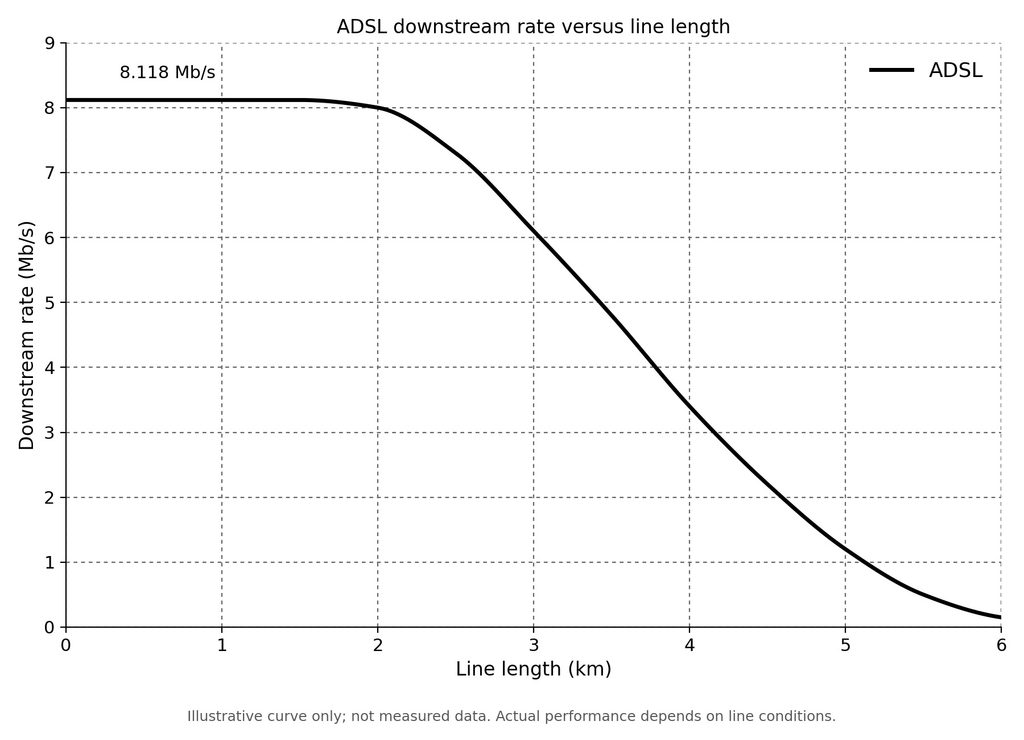
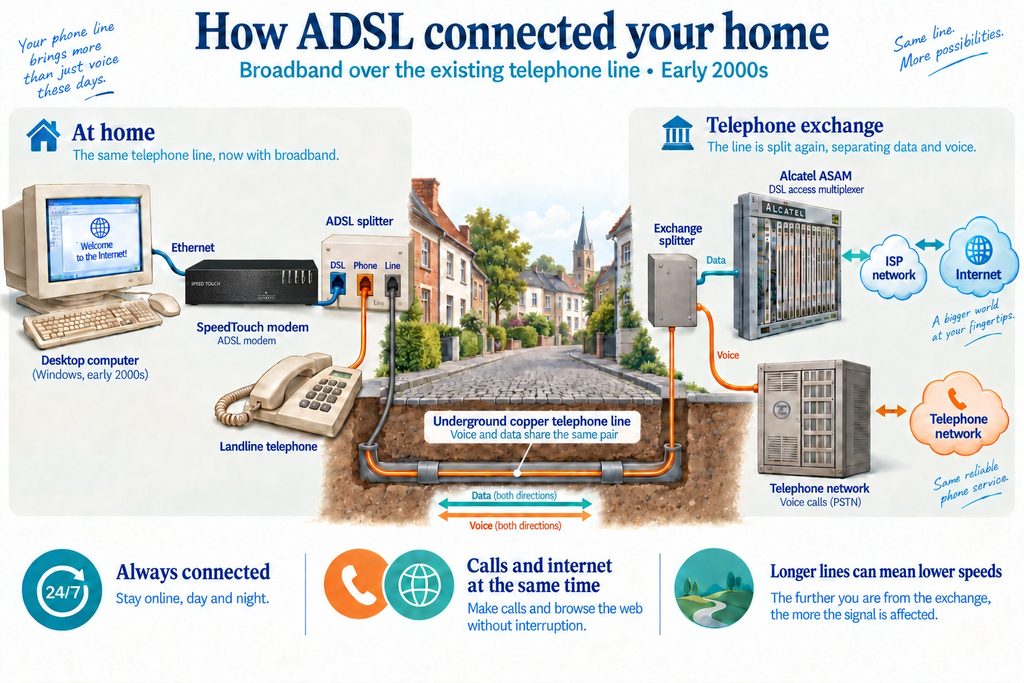
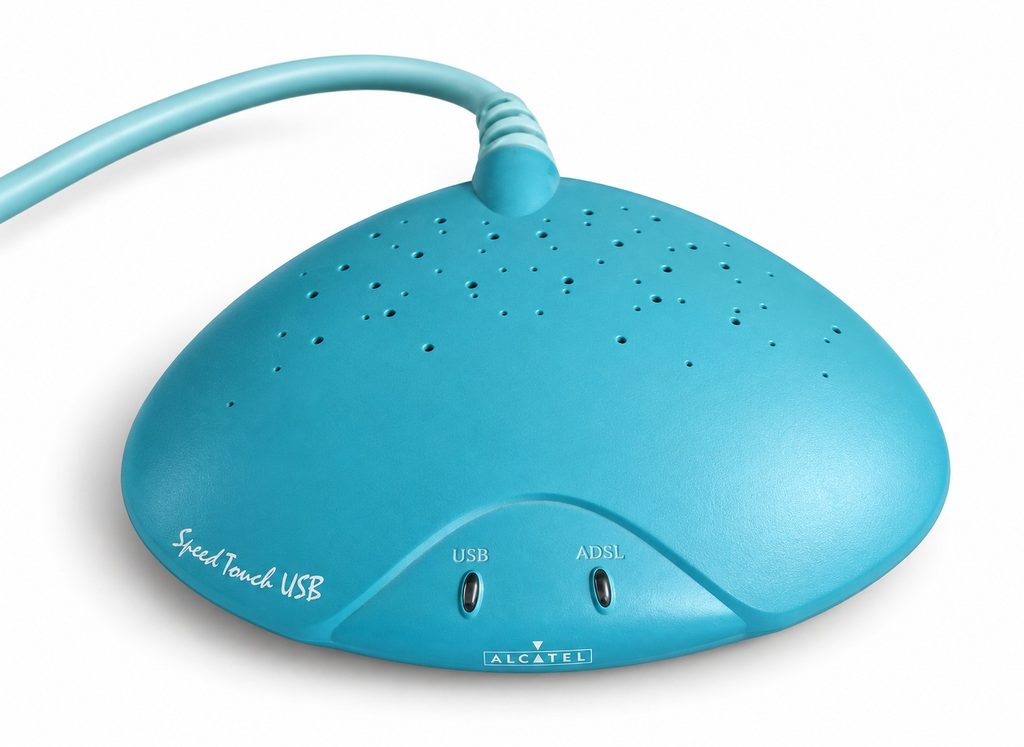
ADSL, short for Asymmetric Digital Subscriber Line, was one of the main technologies that brought broadband internet into homes during the 2000s. It was a huge step forward from the familiar 56K dialup modem. ISDN connections were also available, typically offering 64 Kbps or 128 Kbps when combining two channels, but the improvement was modest compared with the several megabits per second that ADSL could deliver over an existing copper telephone line. The original ADSL technology supported downstream speeds of up to approximately 8 Mbps, more than 100 times faster than a 56K modem. However, consumer subscriptions often offered lower speeds, and actual performance depended on the telephone line’s length and quality.
Websites loaded faster, downloading larger files became practical, and users could make telephone calls while staying connected to the internet. There was no longer a need to dial in for every session. For many households, this was the first time the internet felt fast and convenient to use. ADSL’s main competitor was cable internet, which delivered broadband through the cable television network.
South Korea was the standout early adopter, leading the world in broadband penetration during this period. Canada and Sweden were also among the early leaders, although these comparisons include cable and other broadband technologies alongside ADSL.
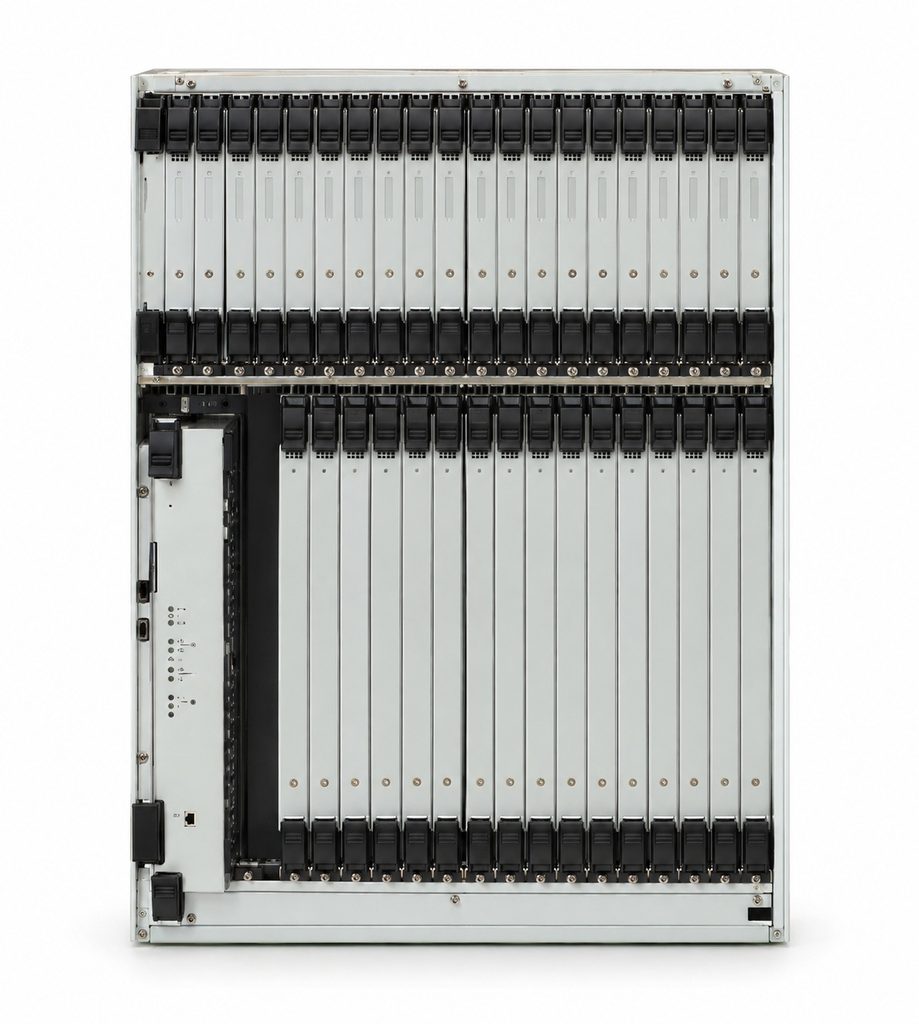
Performance testing examined connection speed, data throughput and stability under different telephone line conditions. A wireline simulator made it possible to reproduce different cable lengths and signal attenuation, allowing repeatable comparisons between modems.
The tests simulated telephone line lengths from 0 to 5 km in steps of 200 metres, repeating the measurements under five different noise profiles. This allowed us to assess how increasing distance and different interference conditions affected modem performance.

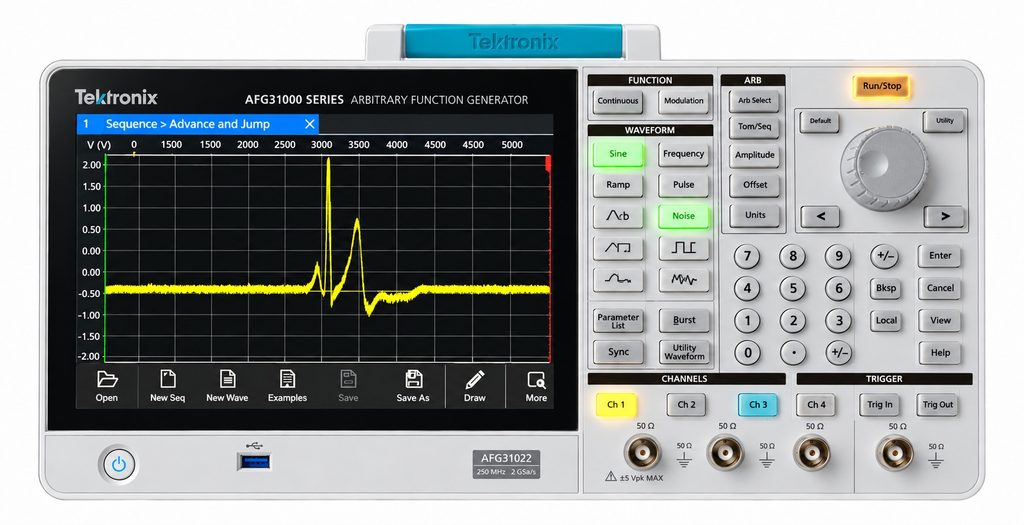
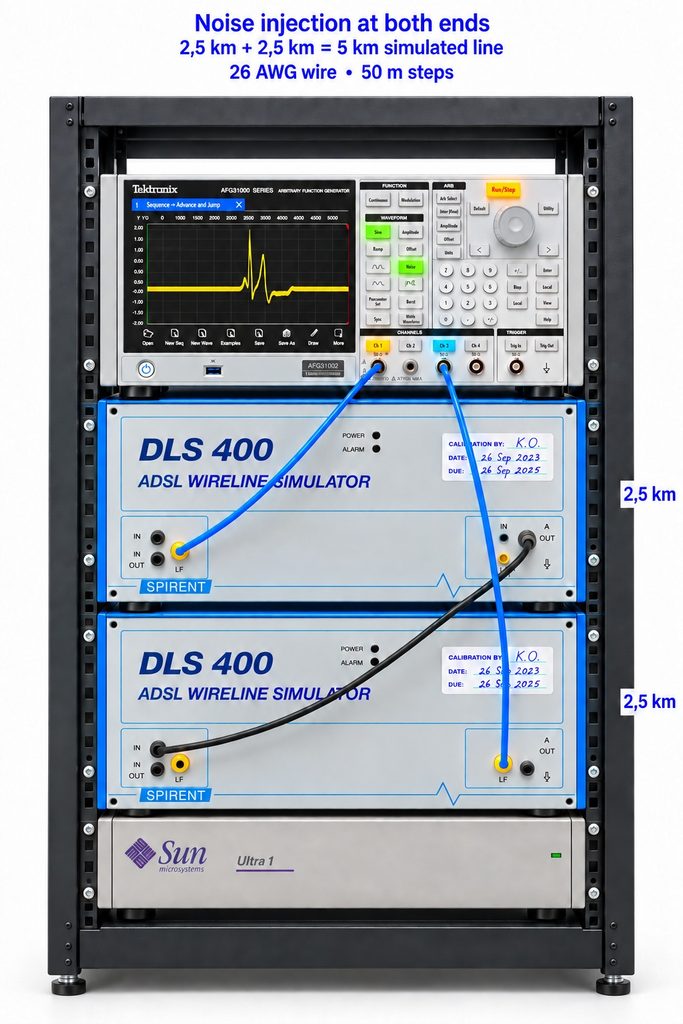
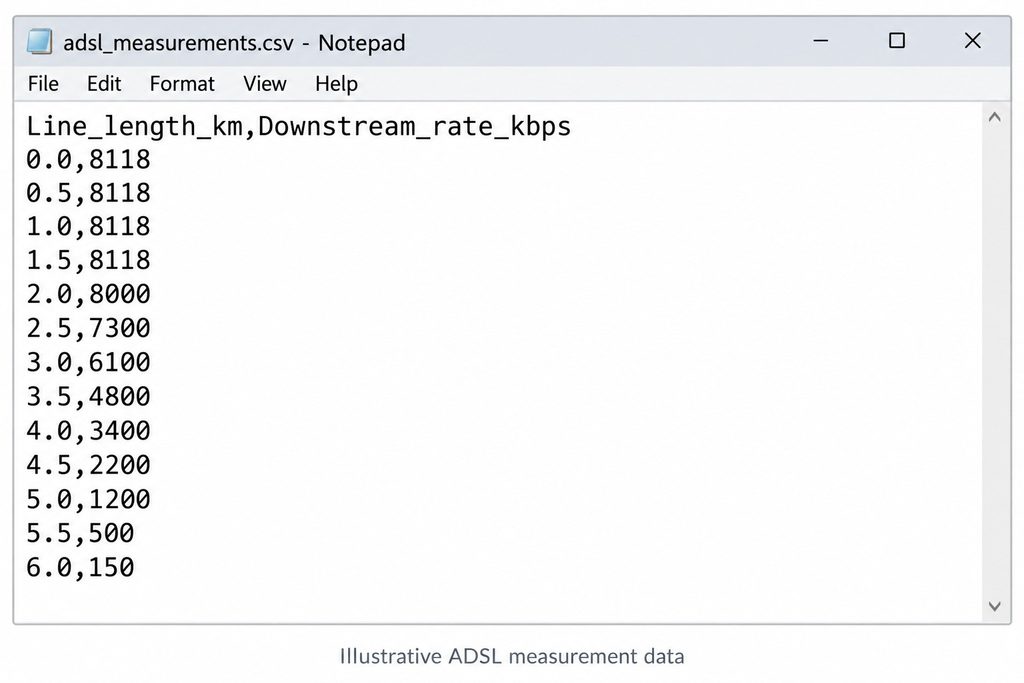
I worked on a VBA macro that consolidated the results of five modem performance tests under different noise conditions into a single Excel workbook. The process started with raw measurements stored in CSV format. The macro imported and organised this data, then automatically generated graphs across five worksheets, one for each test.
These graphs showed how modem performance changed as the simulated telephone line length increased. Turning the raw measurements into clear visual results made it easier to compare noise conditions, spot unexpected drops in speed and identify potential performance issues, without manually processing each set of results.