Why I Built My Own Reverse Proxy and Why It Matters
At some point every developer, tester, or engineer who deploys several web application runs into the same question. How do I expose multiple services to the internet in a clean, secure, and scalable way over a single IP address?
That question is what pushed me to build my own reverse proxy.
What a Reverse Proxy Really Does
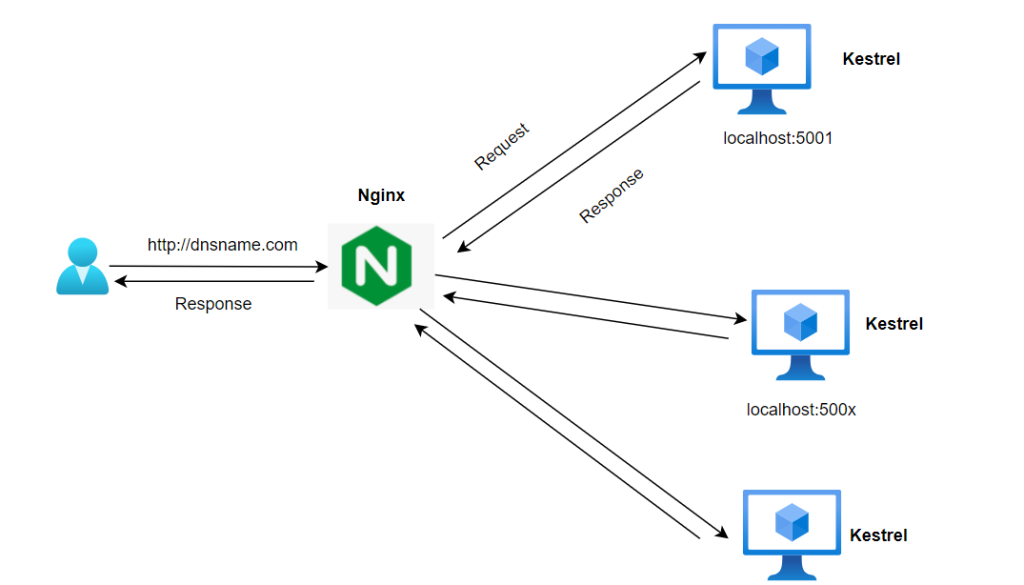
Clients connect to one IP address. One entry point. Behind that entry point, the reverse proxy decides where traffic should go based on the requested domain name, protocol, and headers. It forwards requests to internal services that are never directly exposed to the internet.
This single design choice delivers several benefits.
Security improves because backend services are hidden.
Deployment becomes cleaner because every service follows the same exposure pattern.
Certificates can be managed centrally.
Logging and monitoring become consistent across applications.
Why I Did Not Use a Platform Abstraction
By building the reverse proxy myself, using a minimal and explicit configuration, I gained full visibility into every step of the request lifecycle. When a request fails, I know exactly where to look. DNS, TLS, proxy rules, or backend availability.
Cloudflare in Front, Control at the Core
In my setup, Cloudflare sits in front of the reverse proxy. It handles DNS, edge TLS, and basic protection. The reverse proxy itself remains under my control.
Cloudflare handles the global internet side.
My reverse proxy handles internal routing and application logic boundaries.
Requests arrive at the proxy already filtered and normalized. From there, Nginx routes them to the correct internal service based purely on intent, not exposure. This model can scale from a single hobby project to a professional multi service environment.
One Domain per Service Without Extra IPs
One of the most satisfying results is being able to host multiple applications on a single server, each with its own domain name.
Each service lives on its own local port or container, completely isolated. The reverse proxy maps domain names to internal destinations. No extra IP addresses. No messy port forwarding for users.
From the outside, everything looks clean and intentional.
Learning Value That Actually Compounds
Building a reverse proxy is not just an infrastructure task. It touches skills that compound over time.
Understanding HTTP headers and host based routing.
Debugging TLS and certificate chains.
Reading logs instead of guessing.
Thinking in terms of trust boundaries.
These are skills that transfer directly to software testing, DevOps, and backend development. Especially when working in distributed systems or remote teams.