Introduction
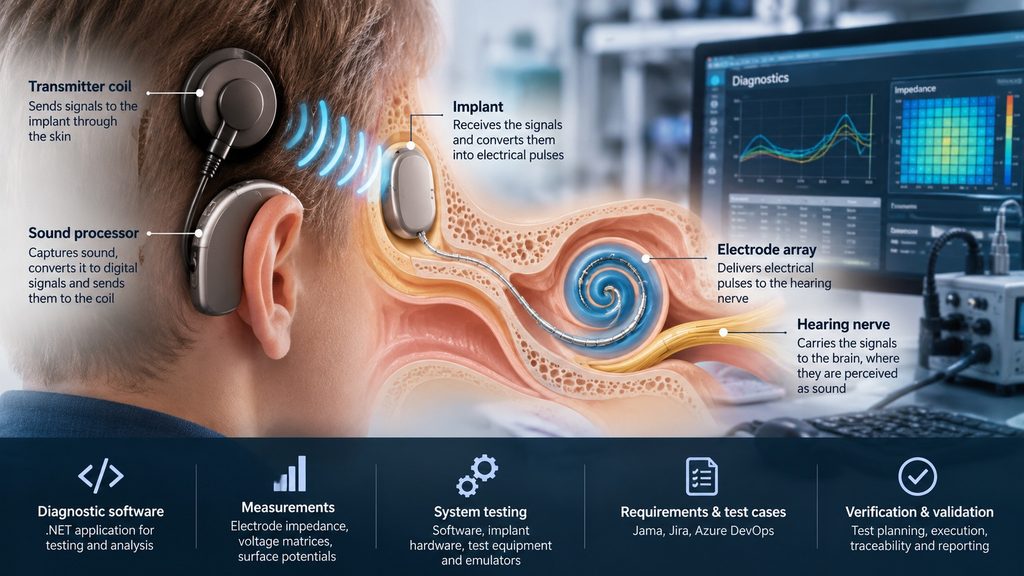
Between March and July 2026, I had the opportunity to work at Cochlear, a global medical technology company specializing in implantable hearing solutions. As an engineer with a background in industrial automation, software testing and system verification, this assignment gave me the opportunity to apply my technical experience in a different environment: medical technology. During this assignment, I worked in Verification and Validation (V&V) for the IDS (Implant Diagnostic Software) project, taking on responsibilities as a Lead V&V Engineer.
What Does Cochlear Do?
Cochlear develops hearing implant technologies designed to help people with hearing loss. The company is particularly known for its cochlear implants, which can provide access to sound for people with severe to profound hearing loss. A cochlear implant is a sophisticated combination of electronics, signal processing, embedded software and medical technology. Developing such products requires expertise from many engineering disciplines, including hardware engineering, software development, systems engineering and quality assurance. From an engineering perspective, it is a fascinating field where technological innovation meets a very practical human purpose.
Verification and Validation: Two Different Questions
One of the most important concepts in medical device engineering is the distinction between verification and validation. Although these terms are frequently used together, they answer different questions.
Verification: Are we building the product correctly?
Verification determines whether a product or system meets its specified requirements. Typical activities include reviewing requirements, defining test cases, executing tests, evaluating results and documenting deviations.
Validation: Are we building the right product?
Validation focuses on whether the resulting product meets its intended use and user needs. Both activities are essential. A product can satisfy its technical specifications and still fail to meet the needs of its intended users. This distinction is particularly relevant in medical technology, where quality is not simply a matter of convenience. It can have direct implications for safety and patient well-being.
My Role as a V&V Engineer
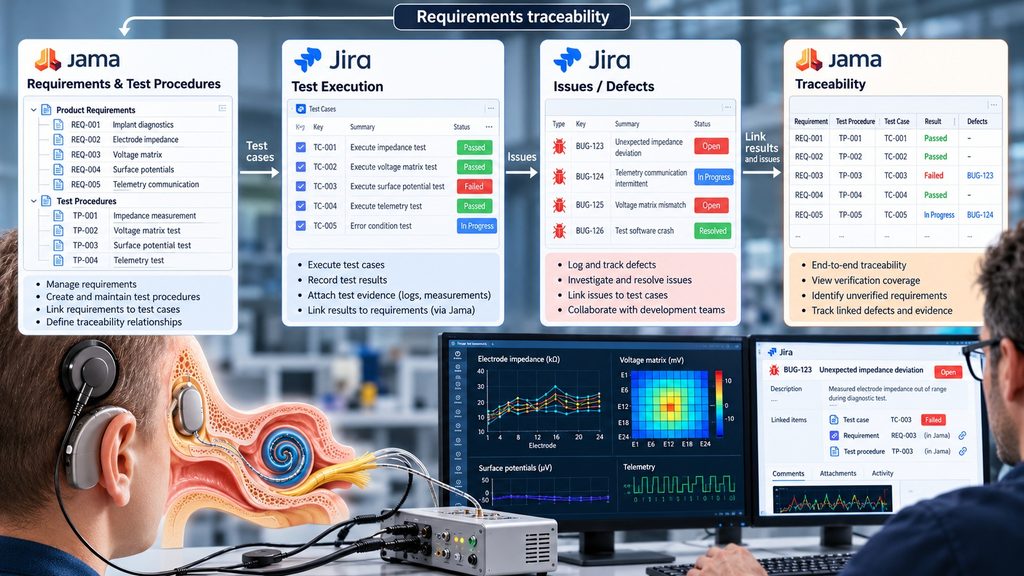
My assignment involved working within a structured engineering environment where verification and validation form an important part of the product development lifecycle. My responsibilities included contributing to V&V activities, working with technical requirements, evaluating verification evidence and supporting the identification and resolution of issues. Taking on Lead V&V responsibilities also required looking beyond individual test cases and considering the overall quality and consistency of verification activities. An important part of this work is maintaining a clear relationship between requirements, test procedures, results and identified defects. This relationship is often referred to as requirements traceability. Good traceability makes it possible to establish which requirements have been verified, what evidence supports the results and which issues remain unresolved.
Why Documentation Matters
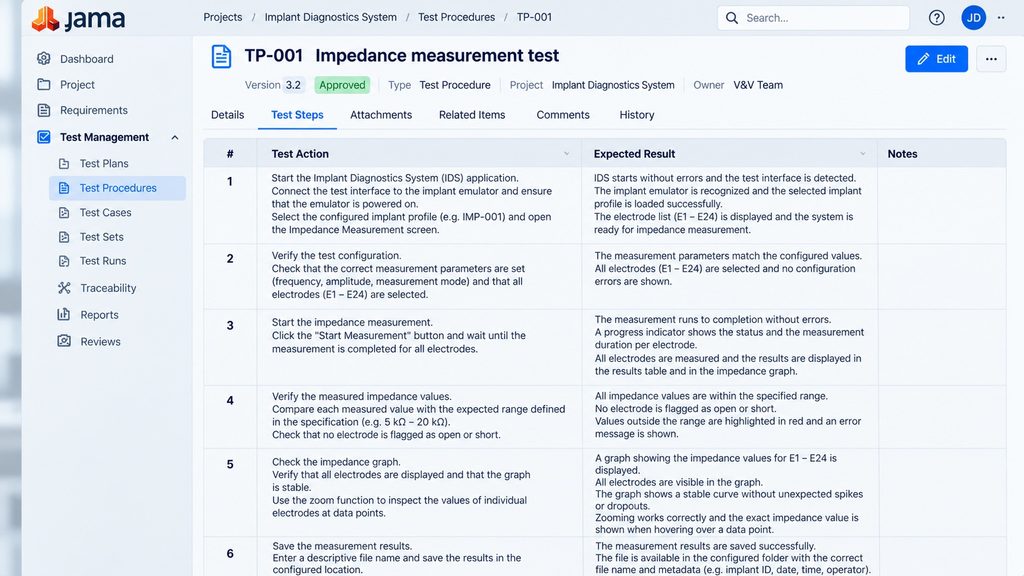
One of the differences between testing in a general software environment and working in medical technology is the emphasis on documented evidence. Executing a test is only part of the process.
The results must also be sufficiently clear, reproducible and traceable to support an engineering decision. This requires disciplined test execution, accurate reporting and careful handling of deviations. In regulated engineering environments, documentation is not merely administrative overhead. It is an essential part of demonstrating that the development and verification processes have been followed appropriately. A test result without adequate supporting evidence may have limited value, even when the system appears to function correctly.
The Importance of a Systematic Approach
Requirements need to be understandable and testable. Test procedures must produce reproducible results. Unexpected behavior must be investigated, and defects must be communicated clearly to the relevant engineering teams. A systematic approach also helps prevent important issues from being overlooked when systems become increasingly complex.
Engineering Quality Is a Team Effort
Verification and validation do not operate in isolation. Effective V&V requires cooperation between engineers from different disciplines, including development, systems engineering and quality assurance. A problem discovered during testing may originate in a software implementation, a hardware interaction, an ambiguous requirement or an incorrect assumption about system behavior. Understanding the underlying cause often requires communication across technical disciplines. For me, this multidisciplinary aspect is one of the most interesting parts of engineering. It combines analytical thinking, technical troubleshooting and the ability to translate observations into actionable information.
What I Took Away From This Assignment
Working at Cochlear broadened my experience beyond industrial automation and infrastructure verification. It reinforced several principles that I consider fundamental to good engineering.
Quality must be built into the development process. Testing is important, but reliable products also depend on clear requirements, sound design decisions and effective communication.
Traceability provides confidence. Being able to connect a requirement to its verification evidence makes engineering decisions more transparent and defensible.
Reproducibility is essential. A test that cannot be repeated reliably is difficult to use as evidence of product quality.
The purpose of the product matters. In medical technology, engineering quality ultimately contributes to products intended to improve people’s lives.
These details are much stronger than generic descriptions of verification and validation.
My recommendation: Make the article primarily about how software testing works in the medical device industry, using your Cochlear assignment as the real-world example. That would showcase your technical experience while remaining accessible to readers outside medical technology.
We should, however, distinguish between general technical knowledge and Cochlear’s proprietary implementation details before publishing.